Custom Search
logo
The online car show dedicated to American-made iron: old skool, new school, and no school
Home Join Login Member cars Games Calculators Tips

Mario's Tribute to the Camaro 2nd Generation 1970 to 1981

1970 Camaro Z28. Added video 2nd Generation Camaro : A game changer for Chevy.

The 2nd Generation Camaro was introduced in 1970, and it ran for 12 Model years to 1981. It was an all-new design, more aerodynamic than the 1st Generation; longer, wider and lower. Several New engines were also introduced.

The 1970 Camaro had a late start being introduced on February 26, 1970, due to tooling problems with the quarter panel dies at Fisher Body. The Dies had to be remanufactured which set them back 5 months. Some people called it a 1970 ½ model due to its late start.

There were 1969 Camaros that were left over and sold as 1970 Camaros before the official release. The 1969 model was extended through December 31, 1969, creating a surplus of cars that had not yet been sold. To clear inventory, Chevrolet sold the leftover 1969 Camaros in early 1970 as new cars.

2nd Generation Sales were mixed from year to year. 1979 was the best year with the highest ever sales of 282,571 for any generation Camaro before or since.

This is my Tribute to the 2nd Generation Camaro 1970 to 1981. Enjoy, Mario.
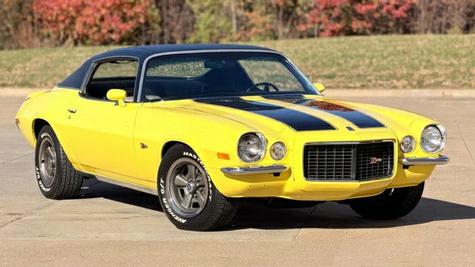
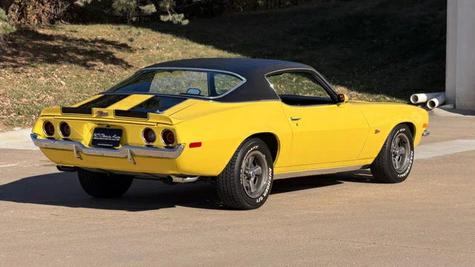
1 1970 Chevrolet Camaro Z28. Introduced on February 26, 1970, halfway through the model year. This caused some people to refer to it as a 1970½ model. The new body style featured a fastback roofline and ventless full-door glass with no rear side quarter windows.

2 1970 Chevrolet Camaro Z28. The car was heavily restyled and became larger and wider with the new styling. A convertible was no longer available. It is known for its distinctive styling, improved performance, and significant historical impact in the American muscle car market.

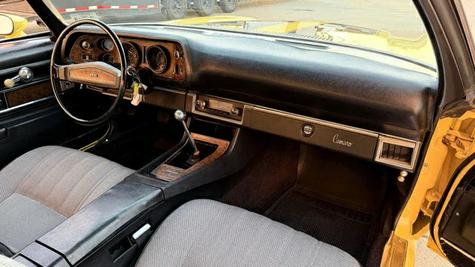
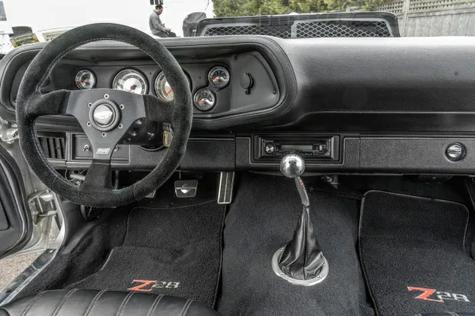
3 1970 Chevrolet Camaro Z28. Inside, a new curved instrument panel featured several round dials for gauges and other switches directly in front of the driver. The second-generation Camaro was an all-new car. Doors were wider to permit easier access to the rear seat, and new pull-up handles replaced the old handles.

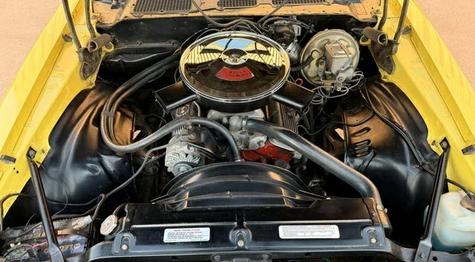
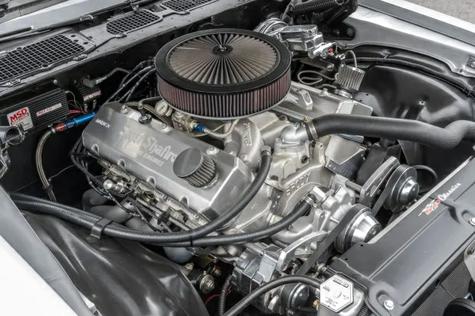
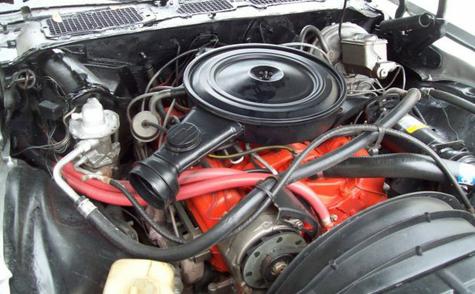
4 1970 Chevrolet Camaro Z28. New high-performance LT-1 350 ci (5.7 L) 360 hp V8. The 1970 model year vehicles are generally regarded as the most desirable of the early second-generation Camaros since the performance of following years was reduced by the automobile emissions control systems of the period and later the addition of heavy federally mandated bumpers. 1970 Sales were 124,901.

5 1971 Chevrolet Camaro Z28. The 1971 Camaro received only minor appearance changes. 1971 Sales dropped to 114,630. Production and sales dropped due to a 67-day corporate-wide strike at GM that coincided with the introduction of the 1971 models in late September 1970.

6 1971 Chevrolet Camaro Z28. GM engineers have said the second generation is much more of a driver's car than its predecessor. A continued declining interest in the pony car market was fueled by skyrocketing insurance rates for high-performance cars.

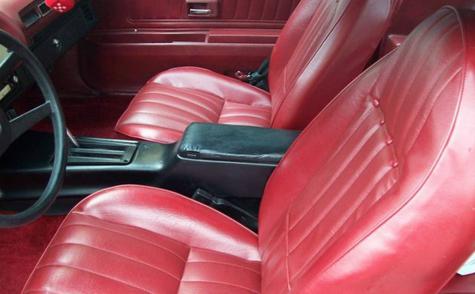
7 1971 Chevrolet Camaro Z28. Road & Track included the 1971 SS350 as one of the 10 best cars in the world in August 1971. Inside, new high-back Strato bucket seats with built-in headrests replaced the 1970 only low-back seats with adjustable headrests.

8 1971 Chevrolet Camaro Z28. The LT-1 350 V8 used in the Z28 dropped from 360 hp to 330 hp due to a compression ratio decrease from an emissions-driven Federal mandate.

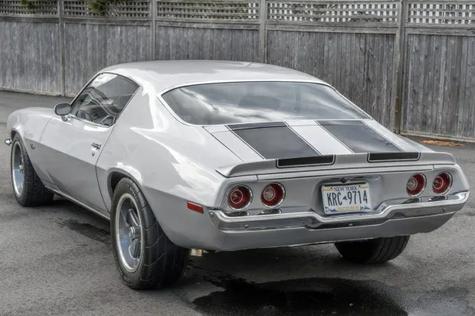
9 1972 Chevrolet Camaro SS396. Only 1 of 970 produced. The 1972 Camaro suffered two major setbacks. The UAW strike at a GM assembly plant in Norwood disrupted production for 174 days, and 1,100 incomplete Camaros had to be scrapped because they could not meet federal bumper safety standards.

10 1972 Chevrolet Camaro SS396. Some at GM seriously considered dropping the Camaro and Firebird altogether, particularly while the corporation was under pressure to adapt its vast number of makes and models to difficult new regulations for emissions, safety, and fuel economy.

11 1972 Chevrolet Camaro SS396. Others pointed out the fiercely loyal followings the cars enjoyed and were convinced the models remained viable. The latter group eventually convinced those in favor of dropping the F-cars to reconsider, and Chevrolet would go on to produce 68,656 Camaros in 1972.

12 1972 Chevrolet Camaro SS396 240 HP. Only 970 SS396s were produced in 1972, and this was the last year for the SS396 and SS350 models, as well as the last year the Camaro was offered with a Big Block from the factory. These are rare cars today. The RS and SS packages were dropped in 1972.

13 1973 Chevrolet Camaro Z28. The 1973 model year incorporated a standard impact-absorbing front bumper system to meet new no-damage standards in 5 miles per hour NHTSA legislation. The Z28 option could be ordered on both the Sport Coupe and LT models. When the Z28 and Type LT options were combined, the usual Z28 badges, stripes, and graphics were deleted.

14 1973 Chevrolet Camaro Z28. A new Type LT model was offered in 1973, with a quieter and better-appointed interior, full instrumentation, Rally-style wheels, variable-ratio steering, sport mirrors, and hidden windshield wipers, among other upgrades.

15 1973 Chevrolet Camaro Z28. Recovering from the strike, Camaro sales increased to 96,751 units during a record sales year industry wide. Other changes included a new console-mounted shifter for automatic transmissions similar to the shifter used in Pontiac Firebirds replacing the Buick-like horseshoe shifter of previous Camaros, and the reintroduction of power windows to the option list for the first time since 1969, with the switches mounted in the console.

16 1973 Chevrolet Camaro Z28. LS2 6.0L 364 CI 400 HP V8. The Super Sport package was dropped, and the big block 396 cu in (6.5 L) V8 was no longer available. Power was down due to new emissions standards, with the top-rated 350 cu in (5.7 L) V8 producing 245 hp in the Z28. The engine was switched from solid-lifters to hydraulic lifters, and air conditioning became available as an option.

17 1974 Camaro LT. Major styling changes were made in 1974. A new slopped grille and an aluminum front bumper with rubber padding. The 1974 Camaro grew seven inches longer, thanks to new bumpers required to meet federal standards and a forward-sloping grille.

18 1974 Camaro LT. New single wraparound taillights in rear. Round taillights were replaced with a rectangular wraparound design. It was the last year to have a flat rear window, with thick roof pillars. All later years had slimmer roof pillars and a wraparound rear window for better visibility.

19 1974 Camaro LT. Sweet Houndstooth Interior. This was the last year of the RPO Z28, which shared the same drive train and engine as in the previous year (1973), based on the Corvette L82 special high-performance engine.

20 1974 Camaro LT. 350 CI V8 Engine 185 HP. Camaro sales increased to 151,008 units, of which 13,802 were Z28s (the highest 2nd-generation Z28 production to this time) despite the energy crisis fueled by the Arab Oil Embargo. This was the last year for the Z28 for now.

21 1975 Chevrolet Camaro. For 1975, a catalytic converter was added to the exhaust system of all US-market GM passenger cars, including the Camaro as required by Federal Mandate. This allowed engines to be retuned for improved drivability and fuel economy.

22 1975 Chevrolet Camaro. A new wraparound rear window was introduced for 1975. The Z28 option was discontinued for 1975 despite an increase in sales to over 13,000 units in 1974. Despite the loss of the Z28, Camaro sales remained steady for 1975 at 145,770 units.

23 1975 Chevrolet Camaro. Interiors were revised slightly with new seat trim patterns and bird's-eye maple trim replacing the Meridian grained walnut on the instrument panel of LT models.

24 1975 Chevrolet Camaro 350 V8 4 BBL 155 HP. With the demise of the other pony cars the previous year, Camaro and Pontiac's Firebird were now the only traditional pony cars left on the market, giving GM 100 percent penetration of this segment for the first time ever.

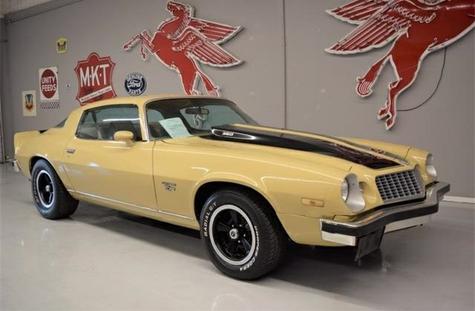
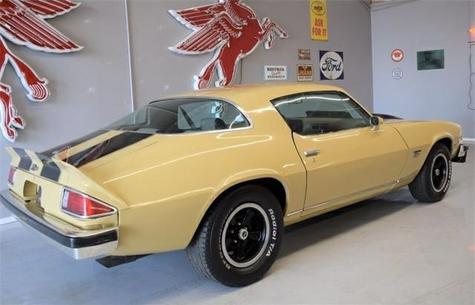
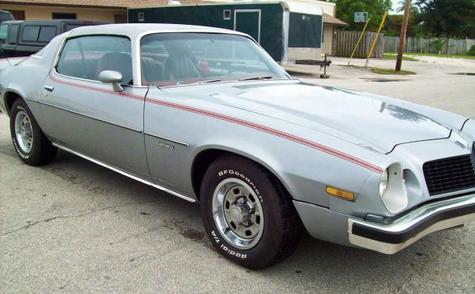
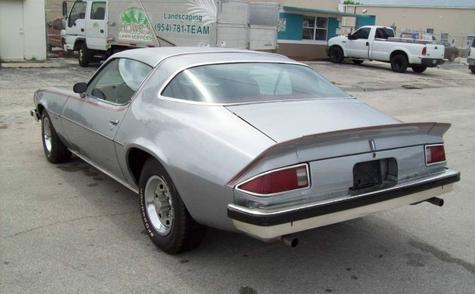
25 1976 Chevrolet Camaro Bicentennial. To celebrate our Country’s 200th Birthday, a new Bicentennial model was introduced. Camaro’s popularity was soaring. Sales totals jumped significantly for 1976 to 182,959.

26 1976 Chevrolet Camaro Bicentennial. Only minor appearance changes highlighted the 1976 Camaro, most notably a brushed metal insert in the rear tail section on the LT model.

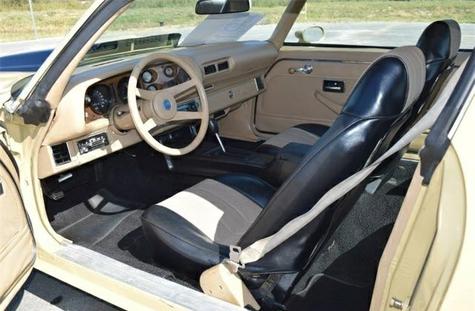
27 1976 Camaro Bicentennial interior. Power brakes became standard on V8 models this year. The best year yet for the second generation were to improve even more dramatically as the decade progressed.

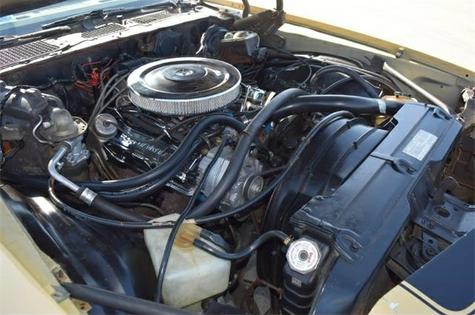
28 1976 Camaro Bicentennial 305 CI V8 140 HP. The 250 cubic-inch six-cylinder remained the standard engine in the sport coupe and a new 140 hp 305 cubic-inch V8 became the standard engine in the LT.

29 1977 Camaro Z28. In response to increasing sales of Pontiac's Trans Am, which sold over 46,000 units in 1976 and accounted for half of all Firebird sales, the Z28 was reintroduced as its own model in the spring of 1977 (as a 1977½).

30 1977 Camaro Z28. Intermittent wipers were offered as a new option in 1977. This year the optional "Bumperettes" were offered for the LT models (front bumper only) and were mandatory for all Camaro models sold in the state of California.

31 1977 Camaro Z28. 1977 Sales set a record for the second-generation Camaro, with 218,853 coupes produced. The Camaro outsold Ford's Mustang for the first time ever. Most Z28s were sold with air conditioning and an automatic transmission.

32 1977 Camaro Z28. 350 CI V8 195 HP. The revived Z28 was powered by a 350 ci (5.7 L) LM1 V8 with four-barrel carburetor producing 195 hp. Z28 production was around 13,000 cars with a 195 hp 350 engine.

33 1978 Camaro LT T-Top. A T-Top roof configuration was offered as an option, introduced on the 1976 Pontiac Trans Am 10th Anniversary Limited Edition. The 1978 Camaro featured new body colored urethane front and rear bumpers.

34 1978 Camaro LT T-Top. Available models included the base Sport Coupe, Type LT, Z28, and the return of the Rally Sport. The Rally Sport (not badged RS as in previous years) featured a standard two-tone paint treatment, and a regular production option on the 1977 Firebird. Brand new taillights in the rear helped drive up sales and new amber taillight turn signals.

35 1978 Camaro LT T-Top. The Z28 models included a stripe package that was not deletable and featured the LM1 a 350 cu in (5.7 L) 185 hp V8 with a four-barrel Quadrajet carburetor.

36 1978 Camaro LT T-Top 305 V8 145 HP. Camaro sales topped all previous years with 272,631 units, of which 54,907 were the Z28 model about 20%.

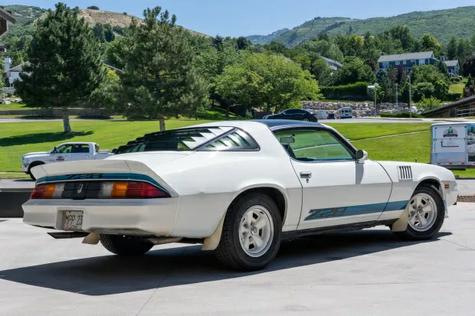
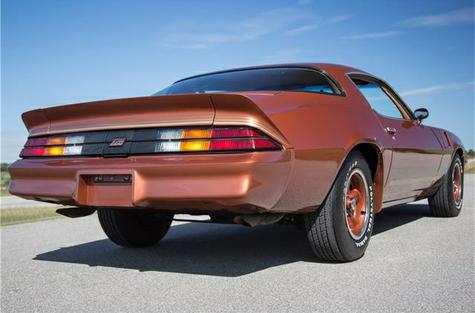
37 1979 Chevrolet Camaro Z28 T-Top. There were few changes to the 1979 Camaro. The base models, RS and Z28 remained, the Z28s came with a front spoiler and fender flares much like the Pontiac Trans Am already had and came with "Z28" decals that ran from the beginning of the front flares to the bottoms of the doors.

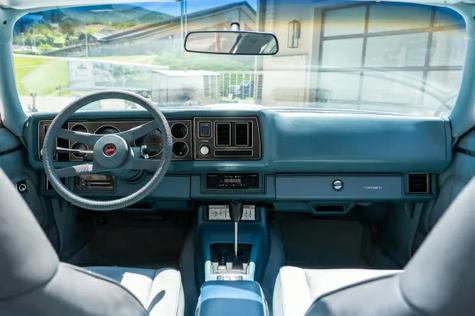
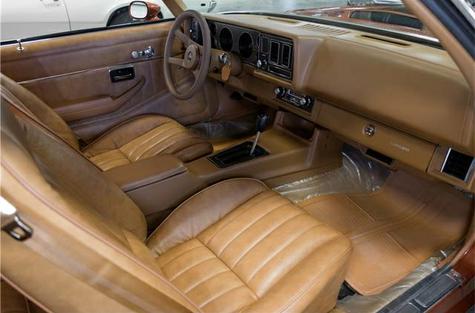
38 1979 Chevrolet Camaro Z28 T-Top. An electric rear window defroster became an option, replacing the old blower type. It had a restyled instrument panel with a much flatter appearance than the previous wraparound design (although the gauges themselves remained in the same places as before).

39 1979 Chevrolet Camaro Z28 T-Top. Sales for 1979 were 282,571 units, the best year ever with the highest sales for any generation Camaro before or since.

40 1979 Chevrolet Camaro Z28 T-Top. 350 ci 175 hp. Engine choices remained with the 250 I6 standard in the base and RS models, and the 305 2bbl being an option.

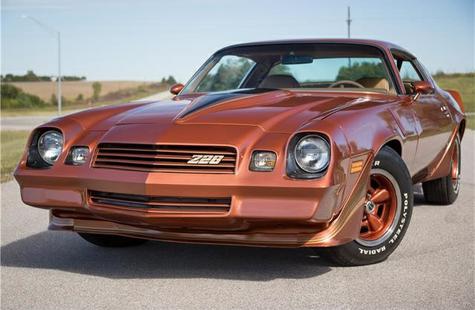
41 1980 Chevrolet Camaro Z28. The Z28 hood included a rear-pointing raised scoop with a solenoid operated flap which opened at full throttle, allowing the engine to breathe cooler air.

42 1980 Chevrolet Camaro Z28. Z28s had new optional grey 5-spoke rims, unique upper and lower front grilles, and smaller revised graphics on its doors. The side scoops were also changed from a louvered design to a flatter one with a single opening.

43 1980 Chevrolet Camaro Z28. 1980 sales dropped to 152,005 units. A federally mandated 85 mph speedometer also debuted, down from 130 mph. The 350 cu in (5.7 L) V8 was only available on the Z28. The 120 hp 267 cu in V8 engine became an option on the base, and RS models.

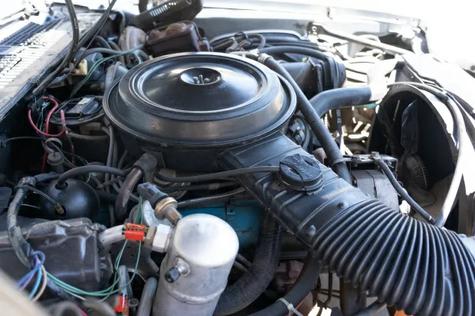
44 1980 Chevrolet Camaro Z28. 350 ci engine 190 hp. The 1980 Z28 models included an air induction hood scoop with an intake door that opened under full throttle. For 1980 the aged 250 cu in inline-six was replaced with a 229 cu in V6 engine.

45 1981 Chevrolet Camaro. The 1981 model was nearly unchanged from 1980 and would be the last model year for the second-generation Camaro after a long 12-year Model run. The RS option was dropped (but would reappear in 1989).

46 1981 Chevrolet Camaro. It was equipped with a CCC (Computer Command Control), a first-generation engine control module (ECM), which had an oxygen sensor, an electronically controlled carburetor, a throttle position sensor, coolant sensors, a barometric pressure sensor, a Manifold Absolute Pressure sensor (MAP), and a check engine light on the dash; it could also be used as a self-diagnostic tool.

47 1981 Chevrolet Camaro. Due to emissions restrictions, Z28s came with two different engines: 350 ci (5.7L) 175 hp V8 or the 305 ci (5.0 L) 165 hp V8.

48 1981 Chevrolet Camaro 305 ci (5.0 L) 4bbl 165 hp V8. Influenced partly by rising gas prices, sales dropped to 126,139 units.

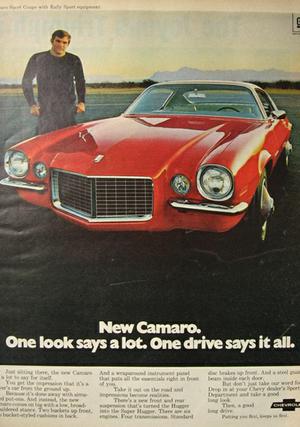
49 1970 Camaro Ad

50 1972 Camaro Ad

51 1974 Camaro Ad

52 1976 Camaro Ad

53 1979 Camaro Z28 Ad

54 1981 Camaro Ad


Video and audio clips

1970 Camaro Commercial


Rare 1972 Camaro SS396 1 of 970 produced.


1977 Camaro Z28


1979 Camaro Berlinetta Commercial


1981 Camaro Dealer Promo Film


2nd Generation Camaro : A game changer for Chevy


Related

More Cars of the 1970s
More Chevy Coverage

11 car nuts gave this a thumbs-up. Do you? Thumbs-up


Comments

Mario on Mar 10, 2026 said:

The 2nd Generation Camaro was all new with redesigned aerodynamic body, longer, wider and lower than the 1st Generation. It was 12 Model years long and improved every year from 1970 to 1981.

The 1970 Camaro was the highest performance car of all due to government mandates restricting performance for the following decade. This is why I made the 1970 Camaro my Cover car. Enjoy, Mario.

[Reply to this comment]

azmuscle on Mar 10, 2026 said:

Very good Mario, I was so glad to see the split grill illustrated on the 70. I often thought that nose will be mincemeat in an accident.

My Camaro experience came in 1972 when I traded in my wife's 1968 Cougar XR7 and my 1969 Olds 442 in on a 1972 Pea Green dog dished ugly green interior with the 6 cylinder and 3 speed on the floor. Oh it did have white wall tires to distract from the ugly green color.

My wife and I were married in 1971 and our son was on the way. We each had a car payment and insurances and with PA inspections the costs were more than JUST my income could bear. Besides I didn't have insurance to pay for my son's delivery due to not being with my employer long enough.

So, $avings is the keyword here. I sold my 308 deer rifle to buy a suit to get married. I needed to put money down on a giant 10X40 single wide mobile home. Yes living the dream.

I worked extra shifts sometimes doubles to try to get ahead and pay the doctor still have enough left over for a Friday night treat at Wendy's or McDonalds.

The gas crunch hot and I traded that ugly green 72 in on a 1973 Vega GT. Note it was the GT MODEL! My work was so very far away that I needed a car that I could make it to work carpooling and still have enough left over for that Friday night treat. I can taste that vanilla milkshake now.

I did buy a 1969 4 door Olds Cutlass for the wife as the gas crunch eased. I also was working two jobs then. One part time from 4 AM to 11 AM then go to my fulltime from Noon until 8PM. Trying to save and buy a house, while putting some funds aside for son number two in 1974.

No more Camaros until the next generation.

I was always torn as I did like the 1970, 71 etc but the 1969 with the hidden headlights has always been my cup of tea. A stable of a 1969 Z28, Ralley Sport of course, a 1970 Z28 split bumper, and of course the trifecta is a Corvette thrown in there for grins and giggles.

With all the union strikes and gas shortages it was a roulette wheel when it came to finding the right car for the right time for the right reasons.

I did get my wife her Chevelle Malibu Estate station wagon with the real fake articial woodgrain. 350, auto, she loved it I think more than me.

I muddled through the later years of this generation Camaros and didn't see anything that popped my cork.

Then my cousin bought a blue and silver anniversary Camaro Z28 from the next generation and so I talked myself into a Z28, but couldn't afford the IROC.

But that's a story for one of your next threads.

Spring has sprung out here in the desert. 90 degrees later this week. I'm sure you east coasters are looking forward to seeing green and not so much white in your yards.

Stay blessed Mario.....well done again SIR!!

[Reply to this comment]

Mario on Mar 11, 2026 said:

Thank you Rob for your Camaro story and insights. Lots of hard work got you through those rough years with marriage and children on the way.

I believe us Baby Boomers had it very rough almost as much as our Parents known as "The Greatest Generation". We were always under the threat of nuclear annihilation in the cold war and still had to survive raising a family.

I commend you Rob for doing all that you had to do to get by. I don't see any of that resilience in today's generation so I say May God Bless them to find their way.

Thank you Rob for an endearing story and keep the Faith. Mario.

[Reply to this comment]

Mario on Mar 12, 2026 said:

I added a new video titled: 2nd Generation Camaro A game changer for Chevy.

[Reply to this comment]


[Login] or


Direct link: