Custom Search
logo
The online car show dedicated to American-made iron: old skool, new school, and no school
Home Join Login Member cars Games Calculators Tips

Mario's Tribute to the 1960 Plymouth XNR Concept Car

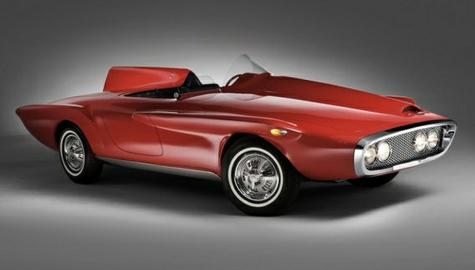
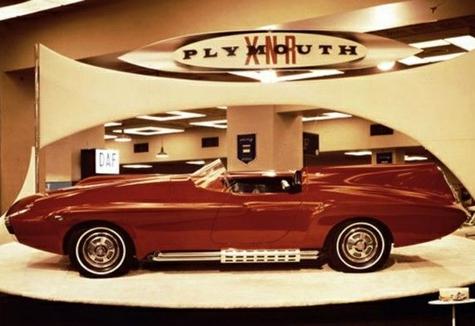
When I first saw the 1960 Plymouth XNR Concept Car, I thought what does XNR stand for? Then after reading about it I found out that Virgil Exner wanted a car named after him so he called it XNR a pseudo-acronym of the designer's own last name, Exner. Very creative.

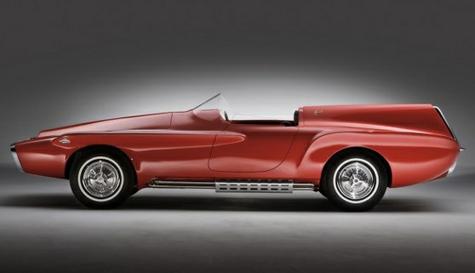
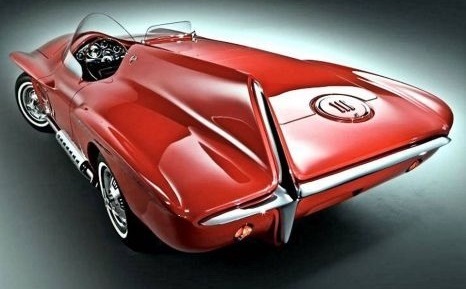
Then I wondered why was the large fin in the back off center. It didn’t seem right to me until I realized the fin followed a line from the front through the driver to the rear. This is a 2-seat Roadster but with emphasis on the driver.

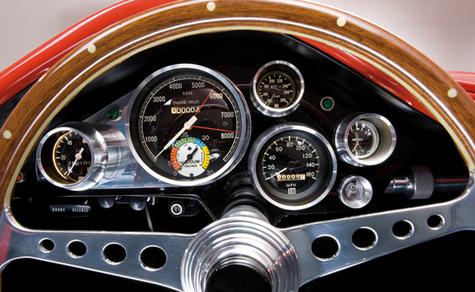
The driver’s windshield is one piece and curved with all the instruments underneath for the driver. There is a second seat for a passenger and there is also a special Tonneau cover that goes over the seat. There’s also a small flip down split windshield for when there is no passenger.

The engine is a Chrysler slant 6 170 ci LG with power pak developing 250 hp. It was clocked at 152 mph at Chrysler's high-speed proving grounds in Michigan.

The 1960 Plymouth XNR survives today and was last sold for $935,000 to a private collector in 2012 at RM Sotheby's Monterey auction. Enjoy, Mario.
1 The 1960 Plymouth XNR is a concept car developed by Chrysler. It was designed by Virgil Exner. The car made its first public appearance at the 1960 New York Auto Show.

2 Also called the XNR 500, the car is an open roadster with some asymmetric features, and was proposed as a sporty addition to the Plymouth model lineup and as competition for the Chevrolet Corvette.

3 1960 Plymouth XNR Concept. The XNR went through several name changes during development.

4 The Final name chosen was "XNR" a pseudo-acronym of the designer's own last name, Exner.

5 1960 Plymouth XNR Concept rear top view. The shape of the XNR was influenced by a Studebaker Indianapolis race car that Exner owned, as well as by the later asymmetrical Watson Indy Roadster and the Jaguar D-Type.

6 Full Instrumentation all on driver’s side for easy viewing.

7 1960 Plymouth XNR Concept with an open door showing the sports car interior and split windshields for driver and passenger.

8 The XNR seats two, and the passenger's seat is set back, mounted 4 inches lower than the driver’s. It has a separate, smaller wind deflector ahead of it on the scuttle that can be folded flat forward out of the way instead of the curved windscreen in front of the driver.

9 The XNR uses both the chassis and "G-Series" Slant-6 straight-six engine from the Valiant, both of which were new for the 1960 model year.

10 1960 Plymouth XNR Concept Car engine. The XNR is fitted with a Slant 6 engine 170 ci LG, which is the only version low enough to fit under the car's hood with a height of 9.06 in.

11 The asymmetric aspect of the design consists of an offset hood scoop and long power bump behind it on the driver's side that continues behind the driver as a tall headrest that tapers into a fin.

12 As originally built, the car reached a speed of 146 mph on Chrysler's test track. Exner is said to have personally driven the car on the track at speeds up to 142 mph. Later, after being fitted with a fiberglass nosecone fabricated by Dick Burke and receiving additional engine modifications, the car reached a top speed of 153 mph.

13 1960 Plymouth XNR Concept Car being shown at Amelia Island in 2011 after restoration. The restoration was completed in March 2011, after which the car was reintroduced at that year's Amelia Island Concours d'Elegance.

14 Originally built in Italy by Carrozzeria Ghia in 1960 as commissioned by Virgil Exner.

15 Exner commissioned a range of concept cars that were built in Italy by Carrozzeria Ghia. Among these were several sporty, open-top, two-seat cars, including three out of four of the cars in the Dodge Firearrow series and the Chrysler Falcon.

16 1960 Plymouth XNR Concept Car top view of driver’s full instrumentation.

17 The XNR was built on the compact-sized unitary chassis of the Valiant, which was cut down and then had its sills reinforced for use in the roadster. This modified chassis was shipped to Ghia in Italy, who built an armature, or body buck, and then formed the car's body in steel over it.

18 Chrysler did not put the Plymouth XNR into production. Exner wanted to buy the car from Chrysler but was unsuccessful. The XNR was shipped back to Ghia in Italy to prevent it from being destroyed.

19 Eventually the car was sent to RM Restorations in Canada in 2008 for a full restoration.

20 In August of 2011 the XNR won the Gran Turismo Trophy at the Pebble Beach Concours d'Elegance.

21 In the front, quad headlamps are mounted in a perforated aluminum grille with a chrome border that serves as a bumper.

22 In the rear is a narrow chrome cruciform bumper, whose main leg stretches across the back and is intersected by another shorter leg that starts below the main bumper and extends up the trailing edge of the rear fin.

23 1960 Plymouth XNR Concept Car front view.

24 1960 Plymouth XNR Concept Car rear view.

25 The glass covers over the dash gauges mimic camera lenses, and the glove box insert was removable, and could be used as a camera case.

26 A rigid steel tonneau cover for over the passenger side effectively converts the car into a single seater.

27 Tonneau cover shown closed.

28 Another view of Tonneau cover shown closed.

29 The trunk lid opens sideways from right to left for easy access.

30 The trunk is plenty roomy for a two-seat Roadster. Side view.

31 The engine was fitted with Chrysler's Hyper Pak performance package. A 170 cubic inch Slant-6 with Hyper Pak typically developed around 148 hp but a power output of 250 hp is often quoted for the engine in the XNR.

32 Slant six view. Apart from the Hyper Pak kit, the engine in the XNR is distinguished by being one of just twelve Slant-6s built to "NASCAR" specifications, which included other upgrades.

33 Tonneau cover shown closed and showing passenger windshield folded down.

34 Tonneau cover shown open with passenger windshield in up position.

35 The engine is related to the engines that powered Slant-6 Valiants to the first seven positions in the inaugural Cannonball Compact Car Division NASCAR race held in January 1960 at Daytona.

36 Engine is a Chrysler Slant 6 straight-six engine with Hyper Pak performance package 170 cu in (2.8 L) 250 bhp Carter AFB 3083S four-barrel carburetor.

37 WB 106 in, L 195 in, W 71 in, H 43 in, Max Speed 153 mph.

38 The side elevation of the XNR's body has features that are exaggerated versions of the body language used on the first generation Valiant and second-generation Dodge Lancer.

39 Naming the car after himself, Exner began with a modified 106.5-inch Valiant/Lancer chassis and the 'Slant Six' engine, so named as it was cantered over at a 30-degree angle within the engine bay.

40 The chassis was shipped overseas to Turin, Italy, where Ghia's craftsmen followed Exner's designs and hand-formed the entire body of steel.

41 The frame of the XNR's grille was constructed of heavy-duty materials and doubled as the car's front bumper.

42 The 'X-motif' rear bumper was a visual reminder of the car's name and essentially asymmetric nature.

43 Though the XNR rode the Plymouth Valiant's tiny 106-inch wheelbase, prominent overhangs stretched its overall length to 195 inches. Height was just 43 inches to the top of the fin.

44 The driver sits behind a dramatically curved 'personal' windshield. A smaller, fold-down windscreen was added for the protection of the passenger.

45 Additionally, the passenger sat somewhat lower than the driver - a design thought to minimize the negative effects of the wind.

46 Unlike most concept cars of the era, this one was meant to be driven. Barely 43-inches high, the car was ultimately clocked at Chrysler's high-speed proving grounds in Michigan at 152 mph.

47 After making the auto show rounds, and the cover of Road & Track and Motor Trend magazines, the car was sold to a Swiss man who sold it to the Shah of Iran. It was later sold to a man in Kuwait and another in Beirut, Lebanon, before joining the care of its current caretaker.

48 Chrysler decided there was just no market; even if there had been, the styling would likely have seemed just too far out to sell well. Finally, Exner's abrupt firing in 1962 killed any chance the design might have had for being refined into something more practical for production.

49 Original car rediscovered in 2009, restored, and kept in private U.S. collection. Public appearances: Amelia Island, Pebble Beach, Lime Rock Concours d’Élégance.

50 Not in a permanent public museum — only occasionally shown at high-profile events. Designed by Exner. Coachwork by Ghia.

51 1960 Plymouth XNR 2012 RM Auctions. On August 18, 2012 the XNR sold for $935,000 at RM Sotheby's Monterey auction.

52 Road and Track magazine cover May 1960.

53 1960 Plymouth XNR Concept Ghia Roadster Motor Trend magazine cover May 1960.

54 Todays Motor Sports magazine cover May 1961.


Related

More Cars of the 1960s
More Plymouth Coverage

4 car nuts gave this a thumbs-up. Do you? Thumbs-up


Comments

Mario on May 10, 2026 said:

The 1960 Plymouth XNR was on of Virgil Exner's last Concept Cars that he designed. It was a unique 2 seat Roadster and meant to be driven.

It toured the world before settling in with a US private collector who paid close to $1 million for it in 2012.

I'd like to hear your comments on this piece of Chrysler History good or bad. Enjoy, Mario.

[Reply to this comment]


[Login] or


Direct link: